
Treatment options
The preferred treatment option is determined depending on the team’s expected arrival time and whether significant brain ischaemia is likely to be present, e.g. due to unexpected death and a subsequent delay at unsuitable temperatures, or due to a stroke. Cooling measures may be undertaken to reduce the risk of ischaemia in such circumstances, but only after death has been legally pronounced. After approximately 48 hours without cooling, significant damage is likely, which could defeat the purpose of the cryonic suspension process regardless of treatment option.
In the following circumstances, perfusion would likely be viable:
| Arrival time | Cooling of patient | Temp °C |
| 4–8 hours | Moved to cool room in hospital or mortuary | 2° to 5° |
| 8–24 hours | Packed with bags of water ice. | 0° to 2° |
In the following circumstances, straight freeze would likely be viable (and preferred so as not to cause further damage):
| Arrival time | Cooling of patient | Temp °C |
| 24–48 hours | Covered with dry ice pellets | –20° to –78° |
IMPORTANT. If the deceased patient’s representative wishes to undertake further cooling measures after legal death has been pronounced (in addition to moving the patient to a cool room), this should be done under the guidance of CryoPath, e.g. via phone. If done incorrectly, the patient’s condition could be compromised and their suspension could be jeopardized.
Procedures
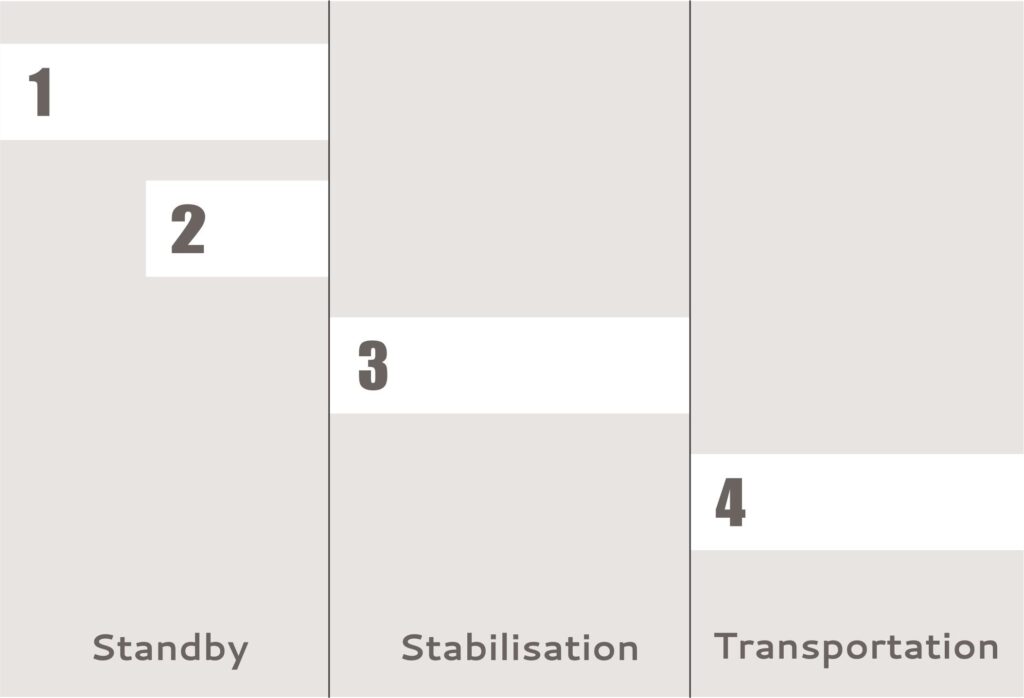
1. CryoPath
NOTE
CryoPath can only proceed with its process if the patient’s financial status is fully paid up. 3 days’ notice is desirable, to allow time for the equipment and supplies to reach the patient’s bedside in a remote location.
PROCEDURE
- Receives notification of patient’s terminal condition and location from patient’s representative.
- Contacts nominated cryonic storage facility to advise of patient’s imminent arrival and to check his/her financial status.
- Engages standby personnel and consults medical perfusionist to determine the preferred treatment option.
- Notifies central funeral director and ensures that equipment, chemicals and supplies are ready for use.
- If perfusion is viable, provides specific equipment that will be needed by perfusionist during stabilisation of deceased patient at the bedside, with preferred notice of 3 days to allow for delivery to a remote location.
2. Funeral director, local
NOTE
If the patient is located in Sydney, these local responsibilities may be undertaken by the central funeral director.
PROCEDURE
- Liaises with hospital staff so that delays will be minimised.
- Obtains death certificate from doctor when patient dies. Note that other than moving the patient to the hospital cool room, cooling processes should not be commenced until the death certificate is obtained.
3. Medical perfusionist
NOTE
The medical perfusionist is engaged only if perfusion is viable. For a straight freeze, stabilisation responsibilities are undertaken by the local funeral director.
PROCEDURE
- Attends patient’s bedside during final hours if sufficient notice is given.
- Commences cooling, cardio-pulmonary support and anticoagulant medication, and continues while transporting patient to funeral director’s premises.
- Stabilises patient above water-ice temperature. (The patient is not frozen yet.)
- Performs perfusion with cryoprotectant chemicals.
- Packs patient with dry ice in insulated container. (The patient is now stable for 1 to 2 weeks before further cooling must begin, as long as the dry ice is topped up approx. every 10 hours). This allows for transportation, as shown below.)
4. Funeral directors, local and central
NOTE
If the patient is in Sydney or needs to be transferred there, all responsibilities are undertaken by the central funeral director. Otherwise, responsibilities are undertaken by the local funeral director without the need for an interim transfer to Sydney.
PROCEDURE
- Arranges transfer to central funeral director by air freight where necessary.
- Sends patient to cryonic storage facility.
Procedural guidance

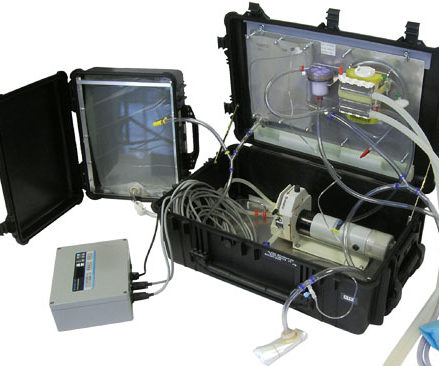
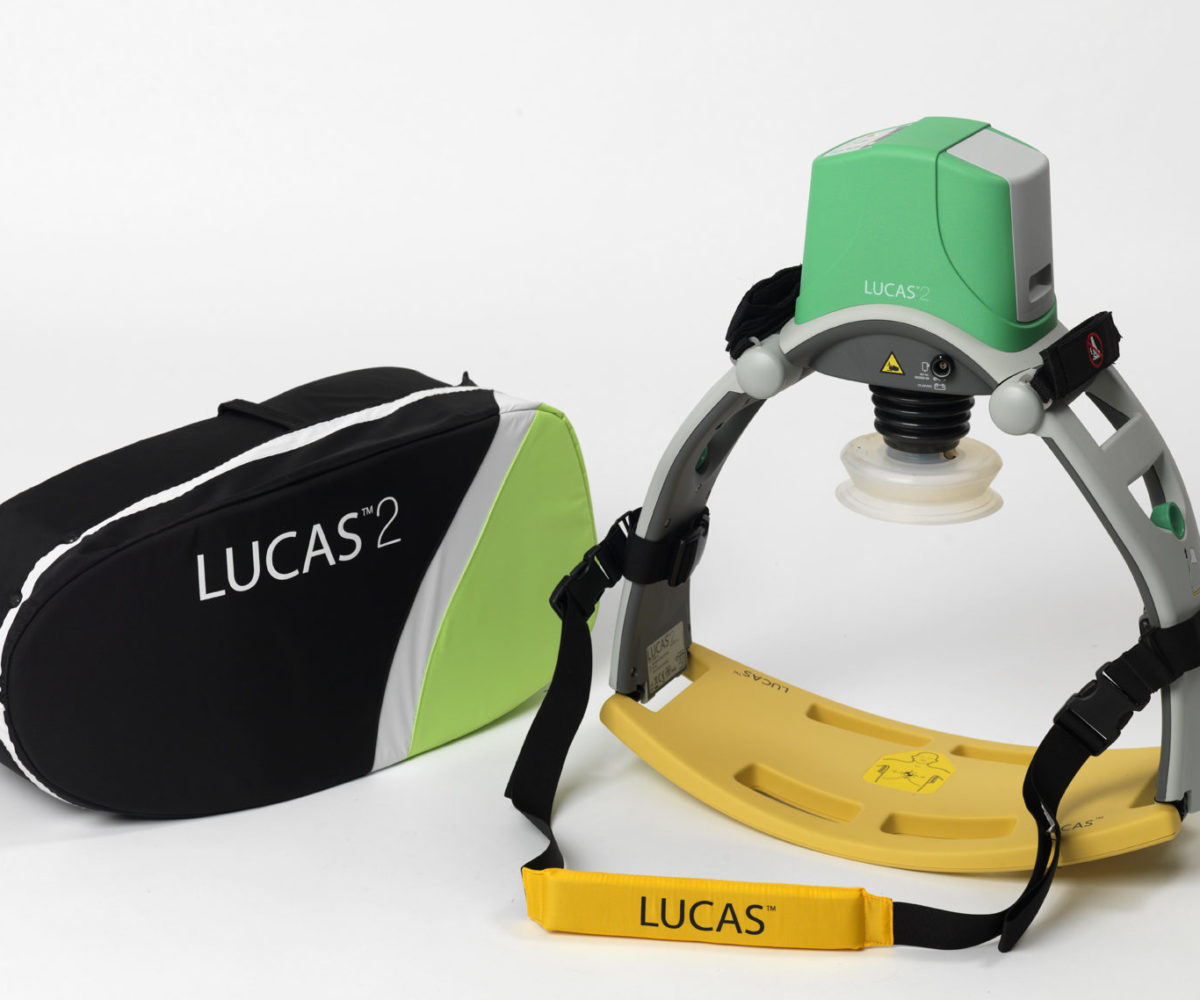
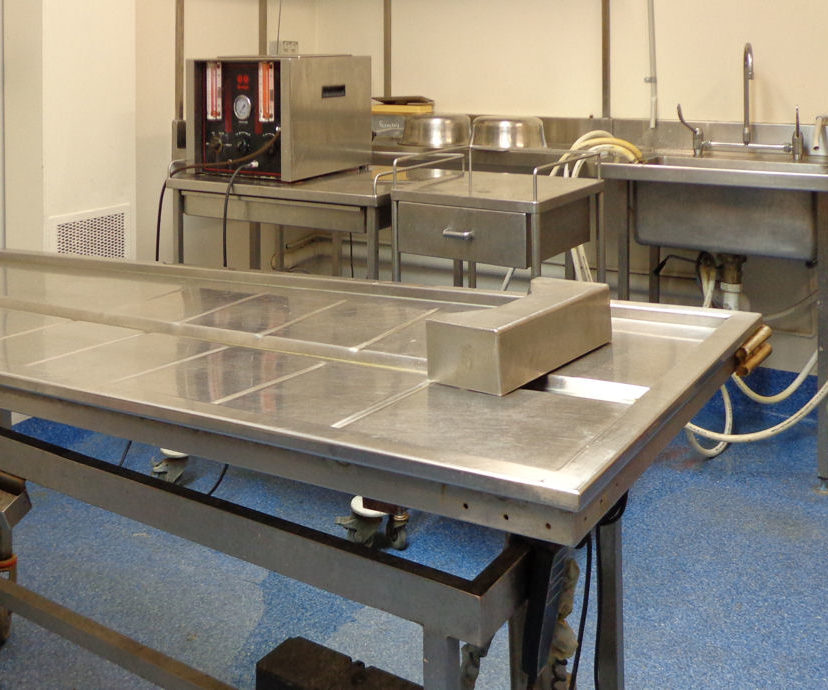
Our procedures are based on those of long-established cryonics organisations in USA. We will need adjustments for our local situation, but in general, we are guided by their procedures and protocols, which can be read in detail here: